Trimoryn Review: What Is Really Inside This Metabolism Formula for Women Over 40?
Quick verdict
Trimoryn has a fully transparent label and a reasonable sales page with no miracle promises. The catch is in the numbers: berberine, glucomannan, alpha lipoic acid and curcumin are all at a small fraction of studied doses, so we would not expect a noticeable effect on weight or appetite from the capsule alone.
What Is Trimoryn?
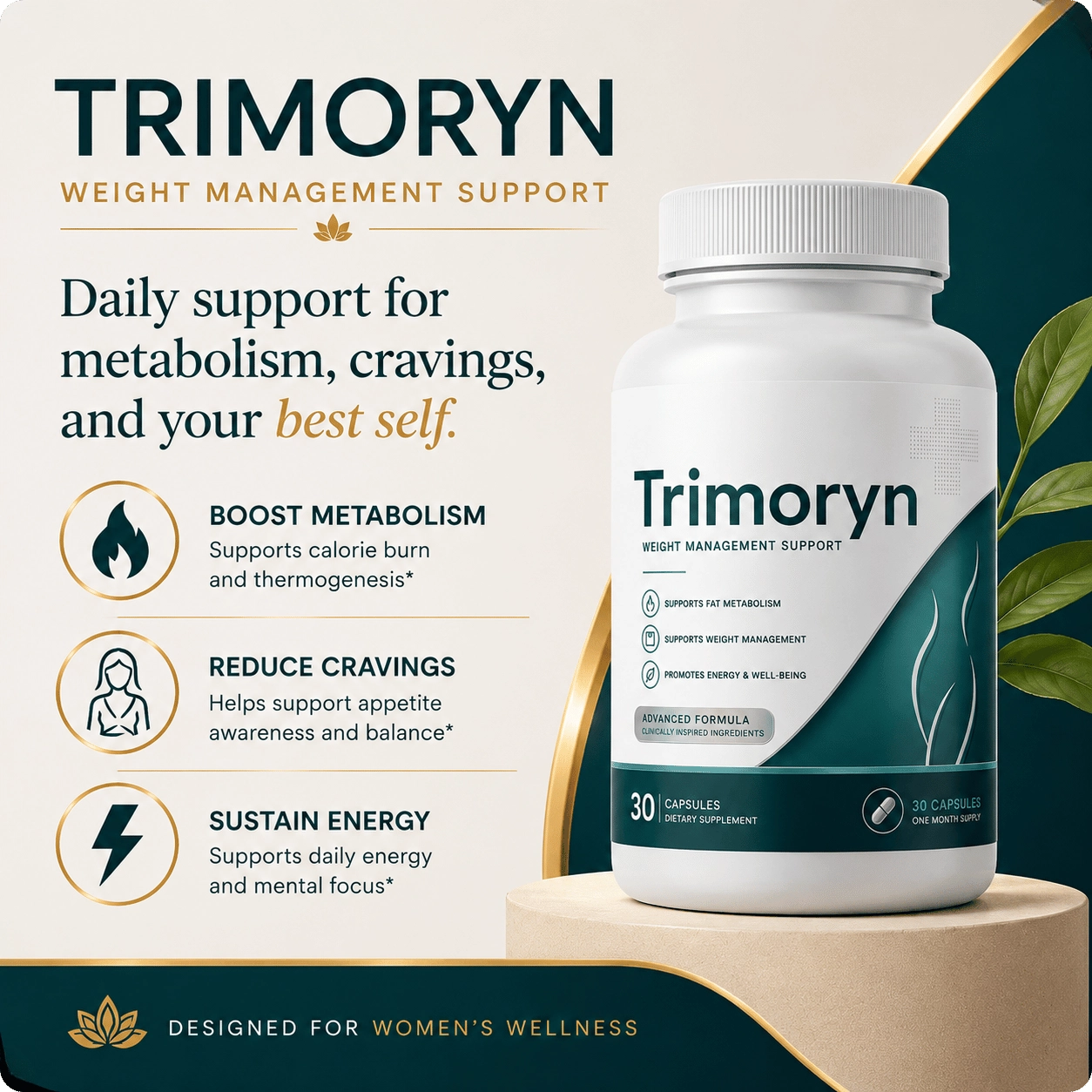
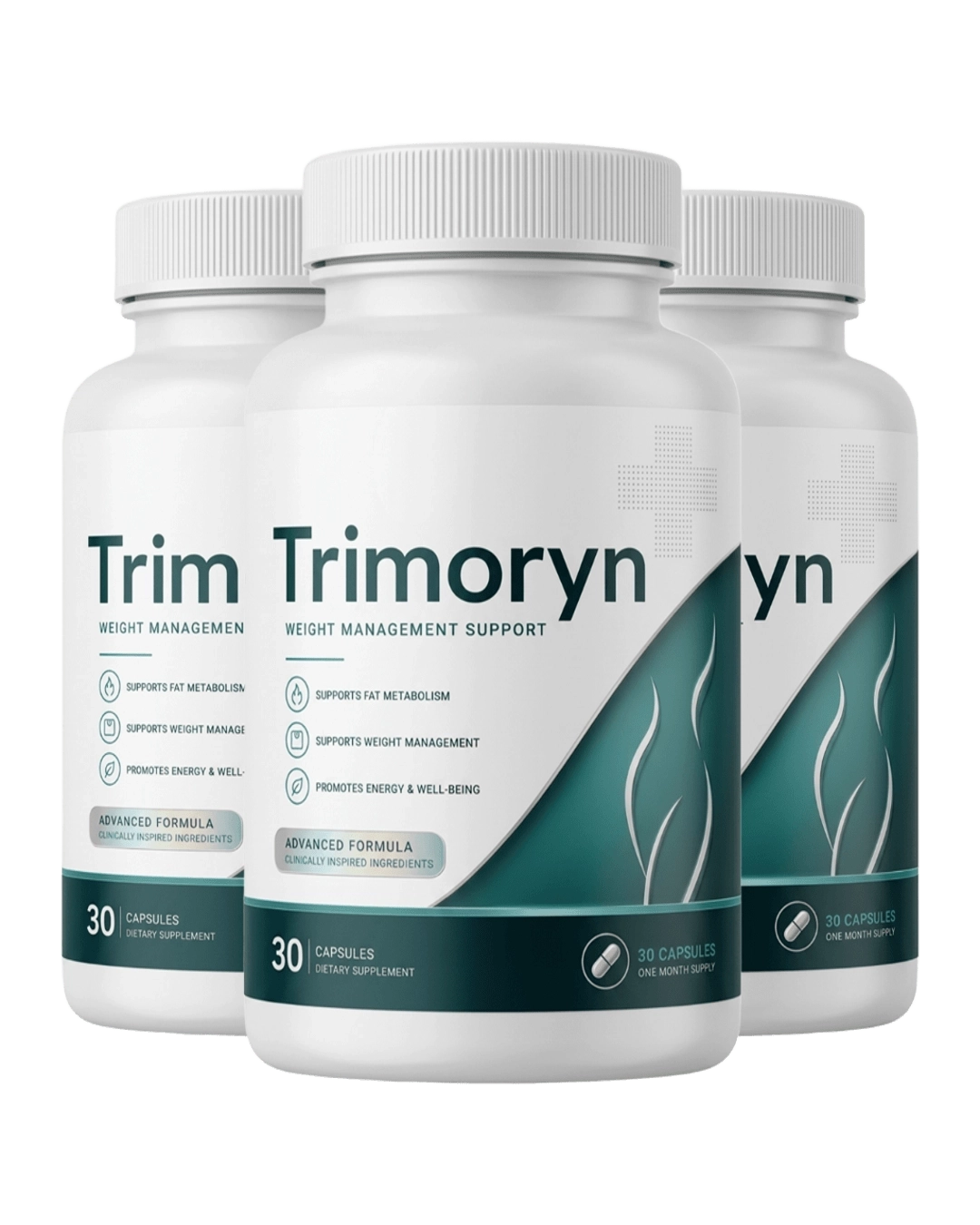
Trimoryn is a dietary supplement sold online through BuyGoods, aimed mainly at women over 40 who want support with metabolism, cravings and appetite. Each bottle has 30 capsules, and the label suggests one capsule a day, 15 to 30 minutes before a meal. The label lists a distributor in Aurora, Colorado.
The formula combines plant extracts (mangosteen, prickly pear, cinnamon, turmeric, berberine, resveratrol), konjac fiber (glucomannan), alpha lipoic acid, vitamin B2 and two probiotics, including Akkermansia muciniphila, a gut bacterium that has drawn research interest. With eleven ingredients in one small capsule, the key question is how much of each one you actually get.
Pros and Cons
👍 What we like
- Clear Supplement Facts panel with every dose. No proprietary blend.
- No caffeine or other stimulants.
- Calm sales page that does not promise dramatic weight loss.
- One capsule a day.
- 60-day money-back guarantee.
👎 What to keep in mind
- Berberine (15 mg), glucomannan (50 mg) and alpha lipoic acid (25 mg) are far below the doses used in research.
- Eleven ingredients in one capsule means small amounts of each.
- $1.63 to $2.63 per day is expensive for these amounts.
- Contains berberine, cinnamon and alpha lipoic acid, which can affect blood sugar.
- No published study on the Trimoryn formula itself.
Trimoryn Label and Doses
This is the full Supplement Facts panel from the official website, with our comparison against the doses typically used in research.
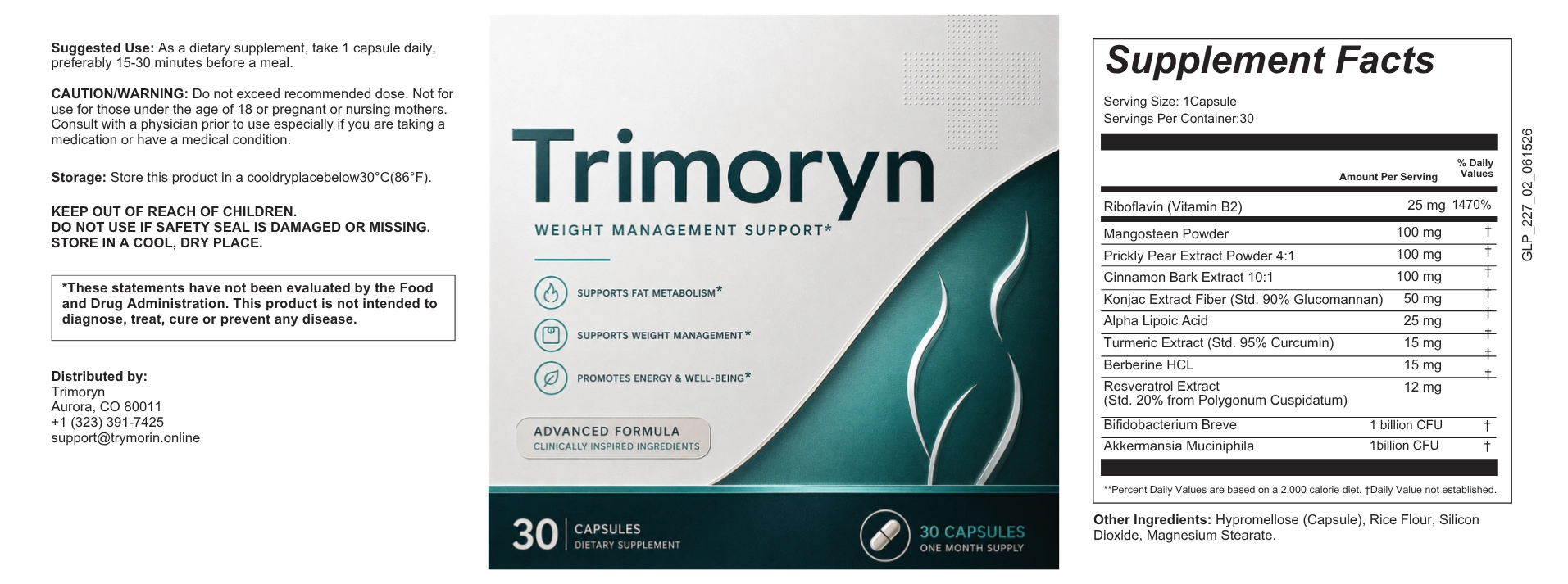
| Ingredient | Per capsule | What studies typically use | Our take |
|---|---|---|---|
| Riboflavin (vitamin B2) | 25 mg (1470% DV) | Helps if your intake is low | Covers daily needs |
| Mangosteen powder | 100 mg | Limited human research on weight | Unclear |
| Prickly pear extract 4:1 | 100 mg | Fiber studies used grams | Far below |
| Cinnamon bark extract 10:1 | 100 mg | Blood sugar studies used about 1–6 g of cinnamon | Low-moderate |
| Konjac fiber (90% glucomannan) | 50 mg | Weight studies used about 1 g, 2–3 times a day | Far below |
| Alpha lipoic acid | 25 mg | Studies usually use 300–600 mg or more | Far below |
| Turmeric extract (95% curcumin) | 15 mg | Studies usually use 500 mg or more of curcumin | Far below |
| Berberine HCl | 15 mg | Studies usually use about 500 mg, 2–3 times a day | Far below |
| Resveratrol extract (20%) | 12 mg (≈2.4 mg resveratrol) | Studies usually use 150 mg or more | Far below |
| Bifidobacterium breve | 1 billion CFU | Probiotic studies vary widely | Modest |
| Akkermansia muciniphila | 1 billion CFU | Early research area; human evidence still limited | Unclear |
Other ingredients: hypromellose (capsule), rice flour, silicon dioxide, magnesium stearate. Study doses are general ranges from published research on each ingredient on its own, not on Trimoryn.
Ingredient by Ingredient
Tap each ingredient to see what it does and what the research says at the dose in Trimoryn.
🌿 Berberine HCl — 15 mg
Berberine is one of the better-studied plant compounds for blood sugar and metabolic health. But studies typically use about 1,000 to 1,500 mg a day, split into two or three doses. 15 mg is roughly 1% of that, so we would not expect the effects reported in research. Berberine can interact with several medicines, including diabetes drugs.
🥢 Konjac fiber (glucomannan) — 50 mg
Glucomannan is a soluble fiber that swells with water and can help you feel full. Studies on weight usually used about 1 g taken two or three times a day with water before meals. 50 mg is a very small fraction of that.
🍂 Cinnamon bark extract 10:1 — 100 mg
A 10:1 extract means 100 mg came from roughly 1 g of cinnamon. Some studies on blood sugar used 1 to 6 g of cinnamon a day, with mixed results. This is one of the more reasonable amounts in the formula, but still at the low end.
⚡ Alpha lipoic acid — 25 mg
An antioxidant your body also makes. Studies on weight and blood sugar typically used 300 to 600 mg or more a day. 25 mg is far below that.
🟡 Turmeric (curcumin) — 15 mg
Curcumin has been studied for inflammation and metabolic health, usually at 500 mg or more a day. 15 mg is a token amount.
🍇 Resveratrol extract — 12 mg
At 20% resveratrol, this provides about 2.4 mg of resveratrol. Studies typically used 150 mg or more.
🥭 Mangosteen and 🌵 prickly pear — 100 mg each
Both appear in some weight-management products, but human evidence for them on their own is limited, and studies on prickly pear fiber used grams, not milligrams.
🦠 Akkermansia and Bifidobacterium breve — 1 billion CFU each
Akkermansia muciniphila is a gut bacterium linked in early research with healthier metabolism, and it is an exciting area of study. Human evidence is still limited, and results depend on the strain and form. Bifidobacterium breve is a common probiotic. 1 billion CFU each is a modest amount.
💊 Riboflavin (vitamin B2) — 25 mg
Vitamin B2 is involved in normal energy metabolism. This dose easily covers daily needs, but extra riboflavin will not speed up metabolism if you already get enough. It can turn urine bright yellow, which is harmless.
What the Sales Page Says vs. What We Found
📣 The claim
The sales page presents Trimoryn as daily support for metabolism, cravings and appetite for women over 40, built on ingredients like berberine, cinnamon, konjac fiber and Akkermansia.
🔎 What we found
To its credit, the page avoids dramatic promises. But it does not mention the doses, which are where the formula falls short: the best-known ingredients are at about 1% to 5% of the amounts used in research.
Our view: Trimoryn reads well on the front of the box and honestly on the back. If an ingredient caught your eye, such as berberine or glucomannan, it is worth knowing that a studied amount usually comes as a stand-alone supplement, and that you should check with your doctor first.
Is Trimoryn a Fit for You?
Answer three quick questions:
Safety and Possible Side Effects
Talk to a doctor before taking Trimoryn if you:
- Take diabetes medication or insulin (berberine, cinnamon and alpha lipoic acid can lower blood sugar).
- Take blood thinners or any prescription medicine (berberine and curcumin can interact with some drugs).
- Have a weakened immune system (the formula contains live probiotics).
- Are pregnant, nursing or under 18 (the label says it is not for them).
- Have gallbladder problems or are scheduled for surgery.
At these doses, side effects are uncommon. Some people notice mild stomach upset, gas or changes in digestion when starting probiotics or fiber. Take it with water and do not exceed one capsule a day.
Trimoryn Price and Guarantee
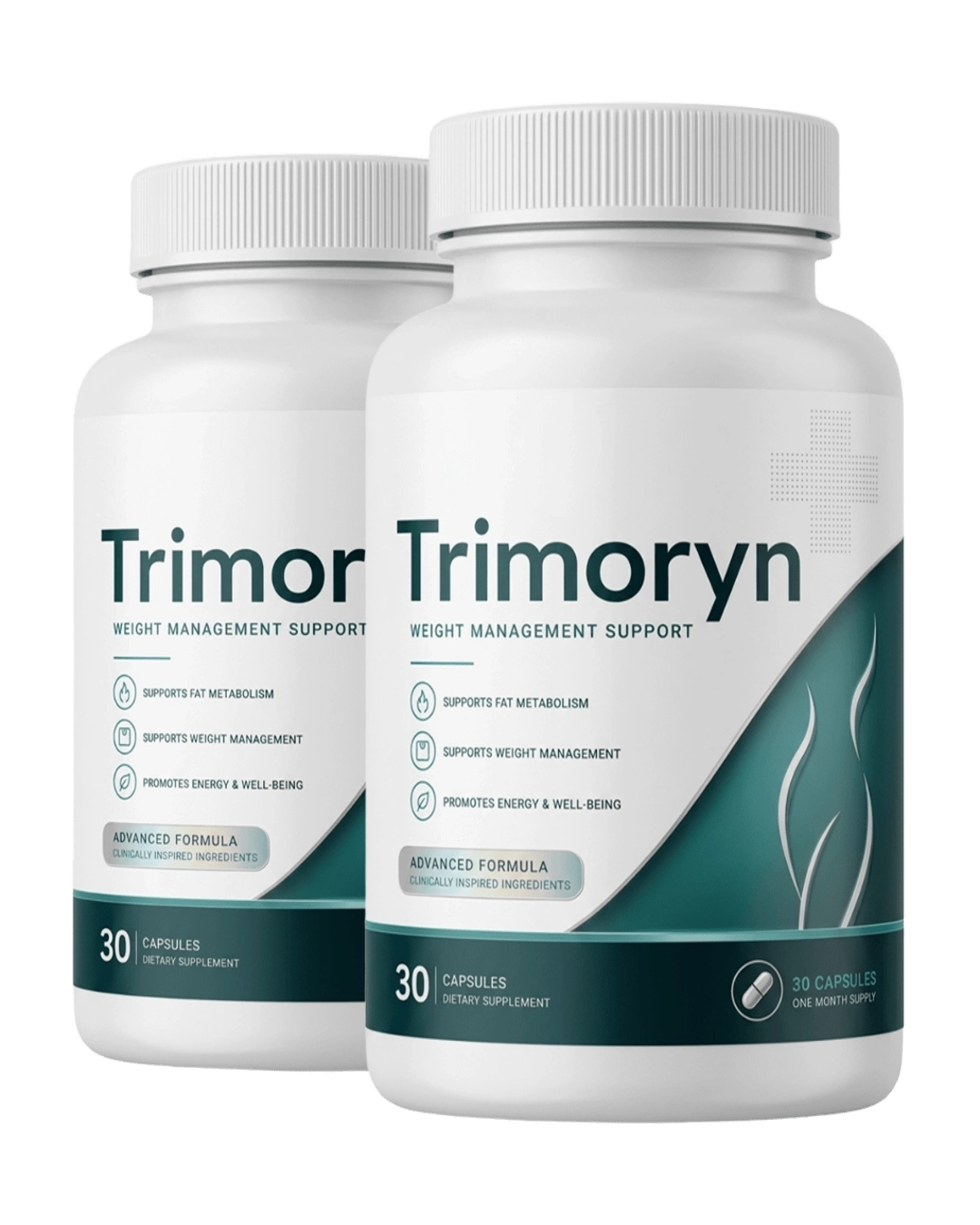 2 Bottles · 60 days
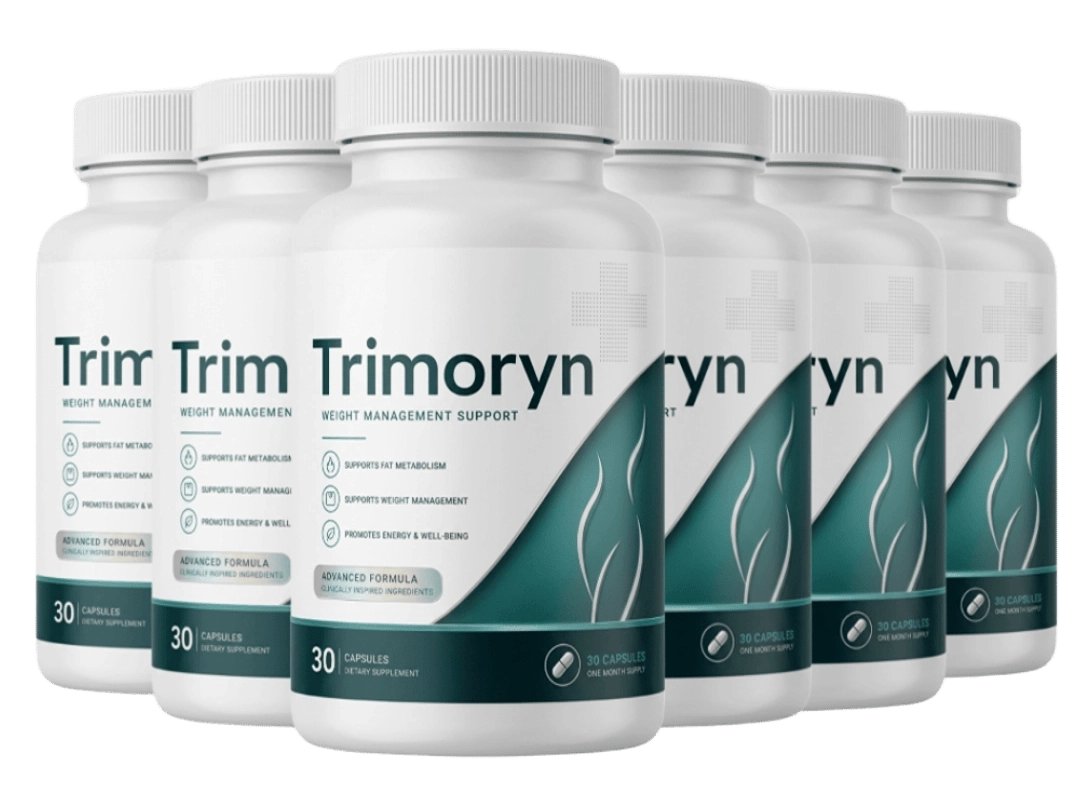 6 Bottles · 180 days
≈ $1.63 per day
 3 Bottles · 90 days
Prices from the official order page on October 9, 2026. All packages include the 60-day money-back guarantee. Prices can change, so confirm the final total at checkout. Our tip: a smaller package is a lower-risk way to see whether a daily capsule fits your routine.
Trimoryn FAQ
What is Trimoryn?
Trimoryn is a once-a-day capsule sold online as metabolism and appetite support, mainly for women over 40. It contains vitamin B2, mangosteen, prickly pear, cinnamon, konjac fiber (glucomannan), alpha lipoic acid, turmeric, berberine, resveratrol and two probiotics, Bifidobacterium breve and Akkermansia muciniphila.
Does Trimoryn work for weight loss?
No study has tested Trimoryn itself. Some of its ingredients, like berberine and glucomannan, have research behind them, but at doses roughly 20 to 100 times higher than what one Trimoryn capsule provides. We would not expect noticeable weight loss from the capsule alone.
How much berberine is in Trimoryn?
15 mg per capsule. Studies on berberine and metabolic health usually used about 500 mg two or three times a day.
Is Trimoryn safe?
The doses are low, but talk to your doctor first if you take diabetes medication, blood thinners or other prescription drugs, have a weakened immune system, or are pregnant or nursing. The label says it is not for people under 18.
How much does Trimoryn cost?
On the official order page: 2 bottles for $158 ($79 each, plus shipping), 3 bottles for $207 ($69 each, free US shipping) or 6 bottles for $294 ($49 each, free shipping). That is about $1.63 to $2.63 per day. Prices can change, so confirm at checkout.
Does Trimoryn have a money-back guarantee?
Yes. The official order page offers a 60-day money-back guarantee on every order, handled by BuyGoods.
Final Verdict
Trimoryn deserves credit for two things: a clear label with every dose and a sales page without miracle promises. But the label also shows why we cannot rate it higher. With eleven ingredients in one capsule, the best-known ones, like berberine, glucomannan and alpha lipoic acid, are present at a small fraction of the amounts used in studies.
If you want a stimulant-free daily capsule and the price works for you, Trimoryn is a low-risk option with a 60-day refund window. If your main goal is weight management, the basics matter far more, and a doctor or dietitian can help you decide whether a single ingredient at a studied dose would be safe and worthwhile for you.
Check Trimoryn on the Official Site
See current prices and packages, with the 60-day money-back guarantee.
Affiliate disclosure: If you buy through our links we may earn a commission, at no extra cost to you. This does not change our verdict. Learn more.